A repayment method for each contract.
Bullet, equal-principal or equal-payment schedules calculate the principal and interest for each installment.
Different contracts and calculations. Connected payments and records. A dedicated product for the details of everyday operations.
Explore the product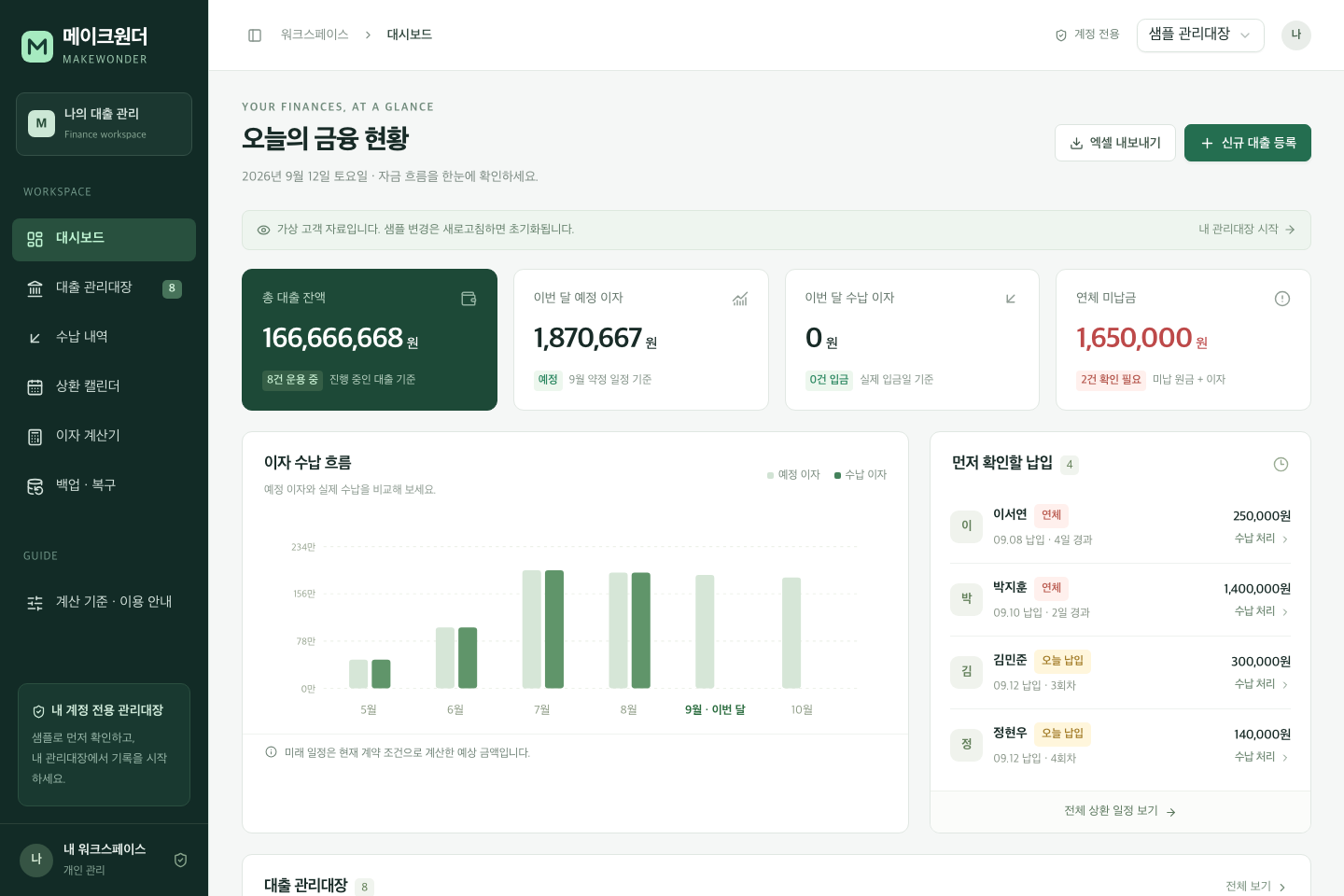
A Korean workspace connecting contracts, payments, a repayment calendar and a calculator.
When contract rules vary and payment records live elsewhere, even a small correction can mean checking several places. This tool is designed to connect that work into one coherent flow.
Each contract defines its repayment method and interest basis. Scheduled amounts follow those terms; money received is kept as a separate payment record.
Bullet, equal-principal or equal-payment schedules calculate the principal and interest for each installment.
Choose a monthly basis, Actual/365 Fixed or Actual/Actual ISDA. Due dates follow the original contract day, adjusting to month-end when needed.
Compare the calculated schedule with actual payments. Review the balance, next due date and unpaid amounts past their due date.
A partial payment, a further payment and a correction. Amounts and history remain connected to the same contract.
This is the interest due for a pre-maturity installment. The scheduled principal for this installment is zero.
Payment goes to the earliest unpaid installment, interest before principal. Here the entire amount is allocated to interest.
The interest for this installment is fully paid. The loan itself is not settled: its outstanding principal remains ₩10,000,000.
Voiding the second entry makes ₩40,000 outstanding again. The original entry keeps its void time and reason, and is excluded from active payment totals.
No payment recorded yet.
R-002 · Voided: entry error
Void time and reason retained
Monthly basis · annual 12% · bullet repayment · first installment. This explanatory sequence does not execute a payment or refund.
Corrections are part of operating a product. Downloaded files, contracts to merge and earlier saved states each serve a distinct purpose.
Export CSV for review and keep the complete JSON as a separate file, including contracts, payments and correction history.
JSON restoration merges only validated new contracts. A conflicting record or changed contract stops the entire merge.
Preview an earlier saved state before restoring it. These recent states live in the same database; downloaded JSON is kept separately for longer-term storage.
This case connects contract calculations, payment allocation, corrections and record recovery. The same approach shapes dedicated systems for bookkeeping, reconciliation and contract operations.